Choosing Between Cotton Floss and Pearl Cotton
Choosing between cotton floss and pearl cotton? Compare strand structure and surface effect to pick a thread that suits your fabric and stitch.
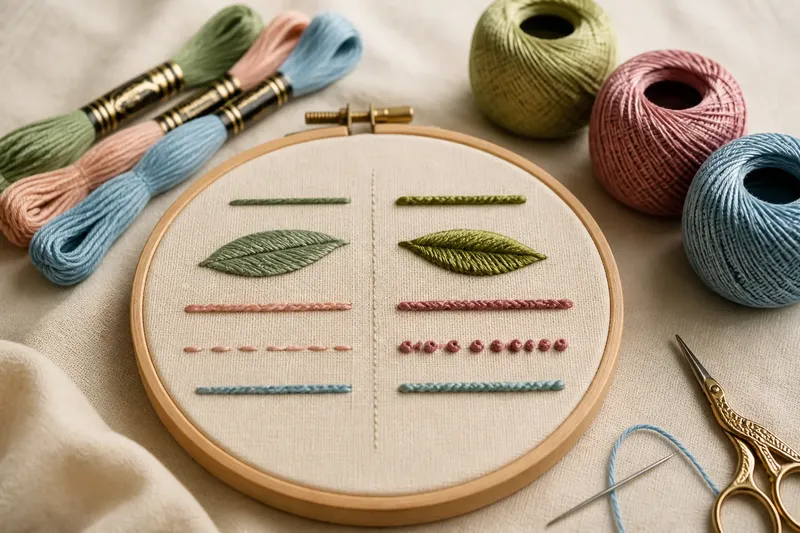
Choosing between cotton floss and pearl cotton changes how an embroidered line sits on the fabric, not just how thick it looks. Divisible floss lets you adjust the number of strands; pearl cotton keeps its twisted structure and produces a rounded, lustrous line. If a thread looks too bulky, too flat or uneven in your first stitches, the cause may be the thread’s construction rather than your technique.
Start by deciding what you want the line to do: blend into a filled area, show as a smooth contour or stand out with a cord-like texture. Then check the fabric, stitch and pattern instructions before settling on a thread. The problems below help you diagnose a mismatch and choose a practical adjustment.
Lines look too heavy
A line that overwhelms a small motif often comes from using too much thread for the scale of the design. Cotton floss is made from separate strands that can be divided and recombined. Pearl cotton is a single, permanently twisted thread, so you cannot remove strands to make it finer.
With floss, begin by separating the strands you need, then bring them together again without twisting them into a rope. Fewer strands usually create a finer, flatter line, while more strands add coverage and presence. The useful number depends on the fabric, needle, stitch and intended effect; a printed pattern may specify a strand count, but that count is a starting point rather than a universal rule.
If you have already started with a thick line, pause before adding more stitches. Compare it with an untouched section of the motif. If the line is too prominent, unpick a small area carefully and redo it with fewer strands. Avoid pulling sharply: that can distort the fabric or snag nearby stitches.
Pearl cotton is a better choice when you want a firm, visible line at its supplied thickness. If that thickness looks excessive against the motif, try a finer pearl cotton rather than attempting to split the thread. A larger stitch can also make a narrow line read more boldly, so consider the stitch length along with the thread.
Coverage looks too thin
Patchy coverage can happen when a floss fill uses too few strands, when stitches sit too far apart or when the fabric colour shows strongly through the gaps. These causes can look similar, but changing the thread immediately may not solve the problem. Inspect the stitched area in good light and look at the spaces between the threads.
If gaps are consistently wide, add stitches or adjust their placement. If the stitches are close together but still look faint, try more floss strands in a small section and compare the result before continuing. For a satin stitch, keep the threads lying side by side rather than crossing over one another; a thicker bundle can cover more, but it can also become harder to lay smoothly on a small shape.
Pearl cotton’s rounded twist gives individual stitches more visible relief, which can make a sparse line appear stronger. It is not automatically the best way to fill a broad area: its cord-like surface may create ridges or leave gaps if the stitch direction and spacing do not suit the shape. For a soft, even fill, divisible floss offers more control over how much thread each stitch carries.
Say you are stitching a small leaf on pale cotton and the first row of floss looks thin. Add a short row beside it, keeping the stitches close and aligned with the leaf’s shape. If the fabric still shows through more than you want, test an extra strand in a separate part of the leaf; compare the two areas before choosing how to finish the motif.
Twist looks uneven
Floss strands can separate or twist together unevenly as you stitch, leaving a line that alternates between smooth and rope-like. This often happens when a long length of thread has had more opportunity to tangle, or when the needle turns repeatedly as it passes through the fabric. Pearl cotton keeps its plied structure, so its surface is usually more consistently twisted, although a snag or frayed section can still interrupt the finish.
For floss, use a manageable length that passes through the fabric without becoming unwieldy. Let the needle and thread hang free now and then so the strands can relax. Before making a stitch, check that the floss lies as a flat bundle rather than as a tight, twisted cord. If one strand has pulled away, ease it back into place instead of tugging the whole stitch tight.
If you want a line with a deliberate corded appearance, pearl cotton may suit the design better than trying to twist floss into a similar shape. Its plies are not meant to be separated. Use the supplied thread as a single unit, and avoid drawing it hard against a sharp fabric edge or rough needle eye, which can abrade the surface.
Surface looks too flat
Divisible floss can produce a smooth, low-profile surface, particularly when used in a modest strand count and laid neatly. That appearance may seem underwhelming if the pattern calls for a clearly raised outline or a decorative line that catches the light. Switching to pearl cotton can add a rounded, slightly lustrous look without changing the stitch itself.
The difference is easiest to judge on a short sample. Use the same fabric and stitch for a few centimetres with each thread, then view the samples from straight on and at an angle. Look for the qualities you want: a broad, soft band, a fine line that recedes, or a defined cord-like edge. A thread that looks attractive on its own may not suit the scale of the motif once stitched.
Floss is often the more adaptable option for delicate details because you can change its strand count. Pearl cotton is useful when you want the twist and sheen to remain visible. Neither thread has a universally better finish; the right choice depends on whether the design needs a quiet line or a more pronounced one.
Fabric puckers or stitches drag
If the fabric gathers around a stitched area, do not assume the thread is simply too thick. Pulling each stitch too tightly, stitching a dense area without adequate support or working with an unsuitable needle can all make fabric pucker. A bulky thread can increase resistance, but tighter stitching is a common issue to check first.
Keep the fabric supported in a hoop or frame if that helps you maintain an even surface, and make each stitch snug rather than taut. The fabric should not be drawn inward by the thread. If the needle is difficult to pull through, check that its eye suits the thread and that the needle is appropriate for the fabric. A tight fit can abrade the floss or pearl cotton and make stitches drag.
When an area has already puckered, stop and inspect the reverse as well as the front. Loosen or remove only the stitches causing the strain, then restitch with gentler tension. Do not try to correct a gathered area by yanking the thread from the front; that may tighten the problem or damage the fabric.
Which thread suits the stitch?
Thread choice is a combination of surface, flexibility and scale. Use divisible floss when you want to control coverage by changing the strand count. Choose pearl cotton when you want an intact, rounded thread with a visible twist. Both can work for outlines and decorative stitches, but one may express the intended shape more clearly.
- Fine details: Try a small strand bundle of floss when the line needs to stay delicate.
- Bold outlines: Consider pearl cotton if a raised, cord-like edge suits the design.
- Broad fills: Floss gives you more options for adjusting coverage and laying a flatter surface.
- Visible texture: Pearl cotton keeps its plied appearance, while floss can look smoother when its strands lie evenly.
- Unclear pattern instructions: Make a small sample with each thread before committing to the main fabric.
These are starting points, not fixed rules. A stem or border can look crisp in either thread; what matters is whether the thread thickness, stitch length and fabric work together. Follow any relevant label or manufacturer instructions for the specific thread and fabric you are using.
Why does the thread choice matter?
Can cotton floss be split?
Yes. Separate the strands gently, then recombine the number you want for the stitch. Keeping the strands parallel helps them form a more even surface.
Can pearl cotton be separated?
No. Pearl cotton is sold as a single twisted thread and is intended to be used intact. If it looks too thick, choose a finer version rather than pulling its plies apart.
Which thread is better for a smooth line?
Floss is often easier to make smooth and understated because you can reduce the strand count. Pearl cotton gives a rounder, more textured line, though careful tension and stitch placement still affect the result.
Can I mix both threads in one design?
Yes, if the difference in surface is intentional and the threads suit the fabric. For example, floss can keep small details quiet while pearl cotton makes a selected outline stand out.
What is not worth adjusting
Do not keep changing needle, stitch direction and thread count all at once to fix a line that looks wrong. You will not know which change helped, and you may create new inconsistencies. Make one small adjustment at a time on a scrap or an inconspicuous section. It is also unnecessary to force floss and pearl cotton into identical finishes: their different structures are precisely what make them useful for different effects.
For choosing between cotton floss and pearl cotton, judge the thread on the fabric and at the scale of the actual design. Floss gives you control over strand count and a potentially flatter surface; pearl cotton keeps its twist and offers a more rounded line. A brief sample, viewed beside the pattern, can tell you which effect fits before you commit to the rest of the work.